Module 5: Islamic Art
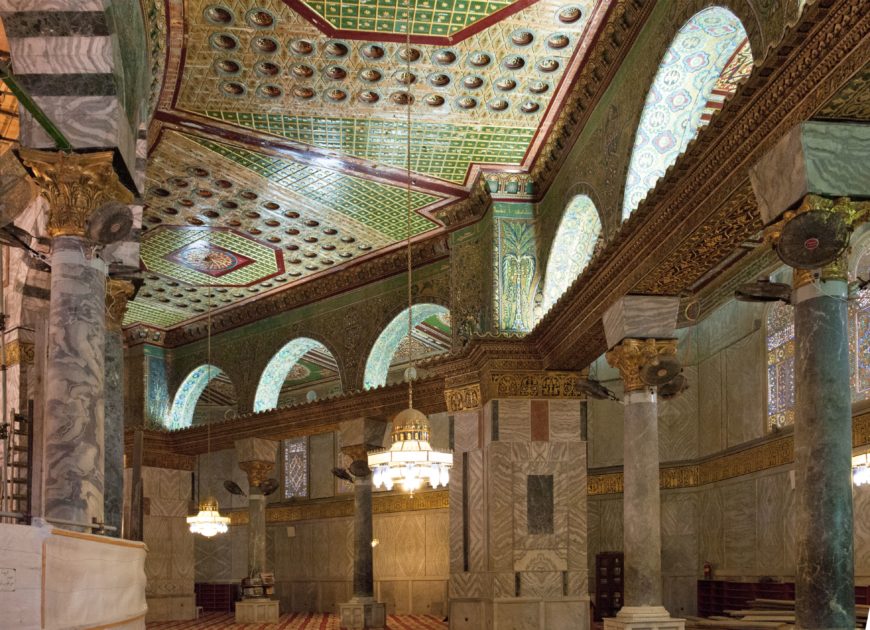
Dome of the Rock, photo: Ross Burns/Manar al-Athar)
https://smarthistory.org/mosaics-early-islamic-world/
This is a photo of the Dome of the Rock. These are some examples of the many types of artwork the Islamic religion showed. from the architecture to the art on the pillars, walls and floors. Personally the art around the architecture is a lot, very vibrant and extravagant, but it makes sense after reading about Islamic religion. The religion is also extravagant. There is expected prayer multiple times a day, fasting is involved, and it is a must to make the pilgrimage to Mecca once in an Islamic believers life. I think the visual elements of the Dome of the Rock kind of explain the religion better, especially after reading up and watching the intro video. There is something untouchable about Muhammed and sacred, obviously because he's the messiah of God but also because of how he is depicted in art throughout history. Like our professor stated it depends on where you are located but a lot of times Muhammad's face was either not put into art pieces or scratched out later on. Thats where the untouchable feeling comes in for me, and it reminds me of this art work because of how pretty it looks, like you don't want to touch it. I also feel like the Dome of the Rock can be related to Muhammed because it is not like the rest of the Islamic architecture surrounding it. Although it is not a mosque it has no resemblance to any that are around it. It is different than the rest like Muhammed was. This also shows how art in the Islamic religion can be different and not all the same, it was changing constantly. A lot of people would agree that the way the Dome of the Rock was made is not like the others. For not being a Mosque the fact that it is so different from the others is what makes it so important.


Comments
Post a Comment